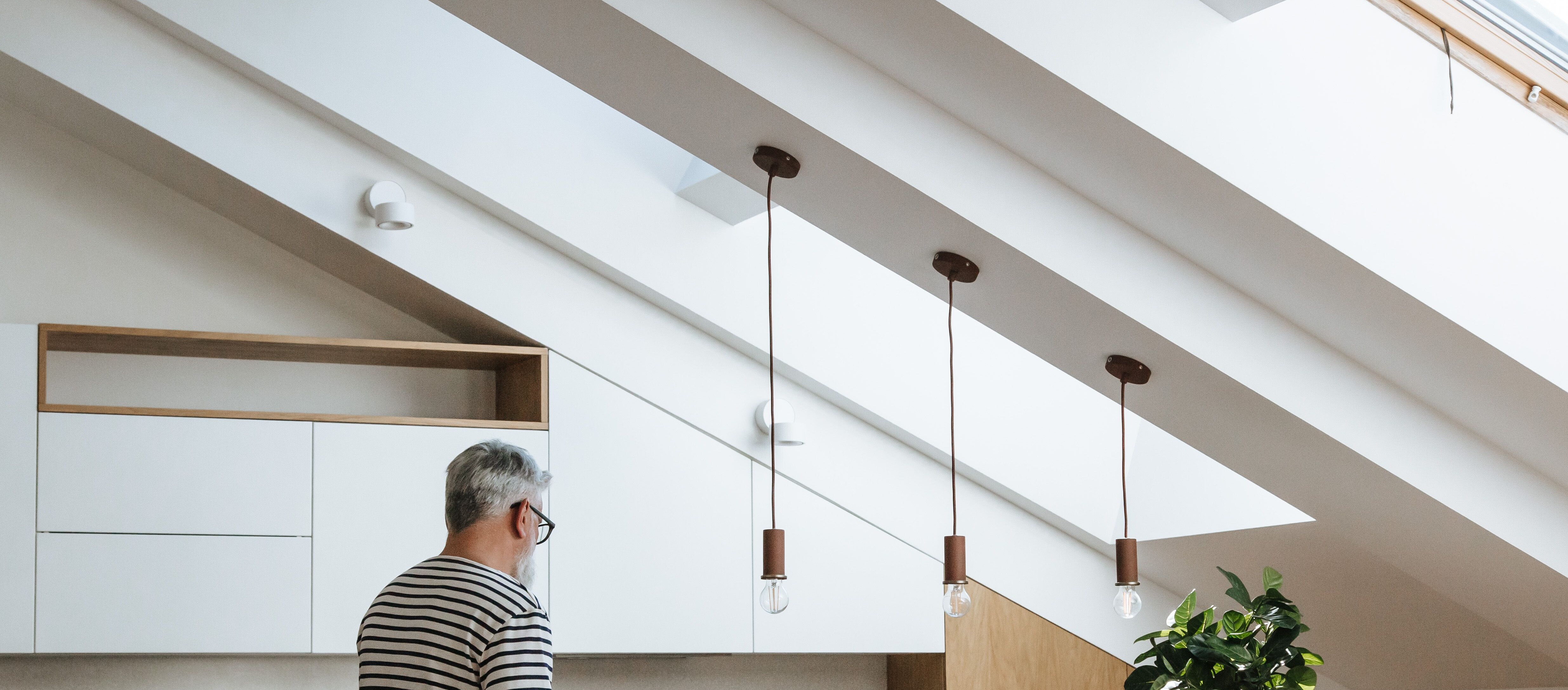
Short answer:
Custom-made sloped-ceiling wall units are produced by specialist joineries and made-to-measure furniture manufacturers across Europe. Companies such as Schumacher (Schrankplaner.de), meine moebelmanufaktur, and Schreinerei Holzdesign Ralf Rapp build wall units precisely adapted to attic angles and roof pitches. Prices range from EUR 800 for a basic flat-pack sloped-ceiling shelf to EUR 8,000 for a fully fitted hardwood wall unit with integrated lighting. The fastest way to compare verified European manufacturers is through a B2B custom furniture directory.
Key Takeaways
- The European custom furniture market was valued at approximately EUR 15 billion in 2025 and is projected to grow at 4.6% CAGR through 2030.
- The global furniture market reached USD 597.71 billion in 2025, with custom services growing at 6.3% CAGR.
- Over 1,085 custom joinery suppliers are listed on Europages alone, showing the breadth of the European supply base.
- Sloped-ceiling wall units cost EUR 800 to EUR 8,000 depending on materials, dimensions, and level of bespoke craftsmanship.
- DIN 68871 and EN 14749 are the key European standards governing stability and safety for domestic storage furniture.
| EUR 15 bn | 1,085+ | EUR 800 - 8,000 |
| European custom furniture market (2025) | Custom joinery suppliers on Europages | Price range for sloped-ceiling wall units |
What Exactly Is a Sloped-Ceiling Wall Unit?
A sloped-ceiling wall unit is a storage or shelving system designed specifically for rooms with angled or pitched ceilings, typically found in attic conversions and loft spaces. Unlike standard wall units, these cabinets and shelves are manufactured to follow the exact angle of the ceiling line, ensuring every centimetre of available space is utilised.
These units are common in residential attic bedrooms, home offices, and study rooms where the roof pitch creates irregular wall geometry. They combine the functions of a wall-mounted shelf, a storage cabinet, and a room-fitting solution into a single piece of custom furniture.
Types of sloped-ceiling wall units
| Type | Description | Best for |
| Open shelving | Wall-mounted shelves cut to follow the ceiling slope | Books, display items, light storage |
| Closed cabinet | Fitted cabinet with doors, concealed behind sloped top panel | Bedroom storage, documents, concealed clutter |
| Mixed unit | Combination of open shelves and closed compartments | Living areas and home offices |
| Full-wall system | Floor-to-ceiling modular system adapted to the roof pitch | Complete attic room fit-out |
| Corner unit | L-shaped unit designed for the intersection of two sloped walls | Attic corners and knee-wall transitions |
What Technical Specifications Should You Expect?
Custom sloped-ceiling wall units are manufactured to fit the exact geometry of the room. The key specifications that buyers should define before requesting a quote include dimensions, materials, load capacity, and mounting method.
| Parameter | Typical Range | Notes |
| Width | 80 - 300 cm | Modular sections can be combined for wider runs |
| Height | 100 - 250 cm | Upper edge follows the ceiling slope angle |
| Depth | 25 - 50 cm | Standard shelf depth 30 cm; cabinets 40 - 50 cm |
| Slope angle | 15 - 55 degrees | Must match the roof pitch; measured on site |
| Material | MDF, plywood, solid wood, particleboard | Solid wood for premium; MDF for painted finishes |
| Surface finish | Laminate, veneer, lacquer, oil, natural | Lacquer and oil are popular for solid wood |
| Load per shelf | 15 - 30 kg | Depends on material thickness and bracket type |
| Mounting | Wall-fixed, freestanding, or built-in | Wall-fixed is standard; built-in requires template |
| Lead time | 2 - 12 weeks | 2 - 4 weeks for semi-bespoke; 6 - 12 for fully bespoke |
Buyers should always request a site measurement or provide architectural drawings with the exact roof pitch angle, wall dimensions, and any obstructions such as Velux windows or exposed rafters. Most specialist manufacturers offer a measurement service as part of the supply package.
Who Are the Leading Suppliers in Europe?
Europe has a well-established network of joineries and furniture manufacturers specialising in custom attic and sloped-ceiling solutions. The market is served by a mix of small craft workshops, mid-size made-to-measure manufacturers, and larger companies offering online configurators.
On Europages custom joinery listings, over 1,085 suppliers are active in the custom furniture and joinery category. The strongest concentration of sloped-ceiling specialists is in Germany, Austria, and Switzerland, where attic conversions (Dachgeschossausbau) are common and Dachschrägenschraenke (sloped-ceiling cabinets) are a standard product category.
Selected European manufacturers and joineries
| Company | Location | Speciality |
| Schumacher GmbH (Schrankplaner.de) | Leimbach, Germany | Online-configured fitted furniture including sloped-ceiling wardrobes and wall units |
| meine moebelmanufaktur GmbH | Ebersbach an der Fils, Germany | Custom cabinet systems with dedicated sloped-ceiling modules and online configurator |
| Schreinerei Holzdesign Ralf Rapp | Geisingen, Germany | Handcrafted sloped-ceiling cabinets built to the millimetre for attic spaces |
| Michael Rohr GmbH | Weinheim, Germany | Custom-built Dachschrägenschränke and bespoke furniture from a traditional joinery |
| Tischlerei Grossegger GmbH | Villach, Austria | High-end interior fit-out and custom furniture since 1726; complex attic solutions |
| Gieringer Moebelmanufaktur GmbH | Oberkirch, Germany | Bespoke built-in furniture combining traditional craftsmanship with CNC precision |
For buyers in the UK, companies such as The Bedroom Company London and LDN Furniture also specialise in bespoke loft and sloped-ceiling joinery. These can be found through europages bespoke furniture listings or via national trade bodies such as the British Furniture Manufacturers.
Which Standards and Certifications Apply?
Custom-made sloped-ceiling wall units sold in the European market must comply with several product safety and quality standards. Buyers sourcing for residential projects, hospitality, or commercial fit-outs should verify that suppliers can demonstrate compliance with the relevant norms.
| Standard | Scope | Relevance |
| DIN 68871 | Stability of domestic storage furniture | Ensures wall units resist tipping under load; critical for sloped-ceiling mounting |
| EN 14749 | Domestic and kitchen storage furniture - safety requirements | Covers sharp edges, entrapment, and structural integrity |
| EN 16121 | Non-domestic storage furniture | Required for commercial and hospitality installations |
| EN 13501-1 | Fire classification of wood-based panels | Mandatory for hospitality and public building projects |
| ISO 9001 | Quality management system | Indicates systematic production quality control |
| FSC / PEFC | Sustainable wood sourcing certification | Required by many public-sector procurement specifications |
| REACH (EC 1907/2006) | Chemical safety for coatings and adhesives | Applies to lacquered, veneered, or laminated surfaces |
Further details on furniture safety regulations can be found on EUR-Lex General Product Safety Directive. The German Institute for Standardisation (DIN) publishes the full text of DIN 68871 for stability testing.
How Much Do Custom Sloped-Ceiling Wall Units Cost?
Pricing for sloped-ceiling wall units varies significantly depending on whether the buyer chooses a semi-bespoke modular system or a fully bespoke handcrafted installation. The table below breaks down typical price bands across the European market.
| Price Band | Price Range (EUR) | What You Get | Typical Supplier |
| Budget / semi-bespoke | 800 - 1,500 | Flat-pack or modular shelving cut to slope angle; MDF or particleboard; self-assembly | Online configurator companies, flat-pack specialists |
| Mid-range | 1,500 - 3,500 | Made-to-measure cabinets in MDF or plywood; lacquered or veneered finish; professional delivery | Made-to-measure manufacturers with online tools |
| Premium / fully bespoke | 3,500 - 8,000 | Handcrafted solid wood units; site measurement; custom colour matching; professional installation included | Master joineries and furniture manufactory workshops |
Additional costs to consider include site measurement fees (EUR 100 to EUR 300 if not included), removal of existing furniture (EUR 50 to EUR 150), and upgrades such as integrated LED lighting (EUR 150 to EUR 400 per unit) or soft-close hinge mechanisms (EUR 30 to EUR 80 per door).
What Is the Difference Between Budget and Premium Options?
The gap between a budget semi-bespoke unit and a premium handcrafted wall unit is not just about price. The differences in materials, construction quality, fit accuracy, and after-sales support are significant.
| Feature | Budget (EUR 800 - 1,500) | Premium (EUR 3,500 - 8,000) |
| Material | MDF or particleboard with laminate foil | Solid wood, high-grade plywood, or veneered MDF |
| Measurement | Customer self-measures using online guide | Professional on-site laser measurement included |
| Slope accuracy | Plus/minus 5 mm; adjustable brackets compensate | Plus/minus 1 mm; precision-cut to roof pitch |
| Finish options | 5 to 10 standard colours and wood effects | Unlimited RAL colours, custom stains, hand-oiled finishes |
| Hardware | Standard hinges and cam-lock fittings | Blum or Hettich soft-close hinges; push-to-open mechanisms |
| Installation | DIY assembly with instructions | Professional fitting by the manufacturer's team |
| Warranty | 2 to 5 years | 5 to 10 years, often with on-site service |
| Lead time | 2 - 4 weeks | 6 - 12 weeks |
For rental properties and budget renovations, semi-bespoke modular systems offer a practical solution. For owner-occupied homes, heritage properties, and high-end hospitality projects, the precision and finish quality of a fully bespoke joinery unit justifies the higher investment.
How Should You Go About Sourcing a Custom Sloped-Ceiling Wall Unit?
Sourcing a custom sloped-ceiling wall unit involves several steps, from initial measurement through to final installation. Following a structured process helps avoid costly errors and ensures the finished unit fits perfectly.
| Step | Action | Details |
| 1 | Measure the space | Record wall width, ceiling slope angle, height at highest and lowest points, and any obstructions (windows, radiators, sockets) |
| 2 | Define requirements | Decide on open vs. closed storage, number of shelves, colour scheme, and whether you need integrated lighting or cable management |
| 3 | Request quotes | Contact at least 3 manufacturers via a B2B custom furniture platform; share measurements and requirements |
| 4 | Compare proposals | Evaluate material quality, finish samples, lead time, installation service, and warranty terms |
| 5 | Verify certifications | Confirm DIN 68871 stability compliance and FSC/PEFC certification if required by your project specification |
| 6 | Place order and schedule installation | Confirm design drawings with a signed approval; schedule delivery and fitting |
It is advisable to request physical material samples before committing, especially for solid wood or veneered finishes where colour and grain can vary. Most reputable manufacturers will send sample swatches free of charge.
What Do Buyers Frequently Ask About Sloped-Ceiling Wall Units?
What is the maximum slope angle that a wall unit can accommodate?
Most manufacturers can handle slope angles from 15 to 55 degrees. Units for steeper pitches (above 50 degrees) may require additional structural support and deeper fixings into the roof rafters.
Can a sloped-ceiling wall unit be installed on a plasterboard (drywall) wall?
Yes, but standard plasterboard alone cannot support the load. You will need to fix into the underlying timber or steel studs, or use specialist plasterboard fixings rated for the unit's weight. A structural assessment is recommended for heavy solid wood units.
How long does a bespoke sloped-ceiling wall unit last?
A well-made unit in solid wood or high-grade plywood, properly installed, will last 20 to 30 years or more. Particleboard and MDF units typically last 10 to 15 years with normal domestic use.
Are custom sloped-ceiling units more expensive than standard wall units?
Yes, typically 30% to 100% more expensive than a standard straight-top wall unit of equivalent width and depth, due to the additional craftsmanship involved in cutting and fitting the slope.
Can I order a sloped-ceiling wall unit online?
Several manufacturers now offer online configurators where you enter your room dimensions and slope angle, and receive an instant price. German-language Dachschrägenschrank listings show multiple suppliers with this capability.
Where Can You Compare Verified Suppliers?
The European market for custom sloped-ceiling wall units is served by hundreds of specialist joineries and furniture manufacturers. The most efficient way to compare verified suppliers, request quotes, and evaluate capabilities is through B2B platforms that list audited manufacturers.
Compare European Sloped-Ceiling Wall Unit Manufacturers on Europages
Sources
- Global Market Insights, Europe Luxury Furniture Market Report 2026-2035
- Fortune Business Insights, Global Furniture Market Report 2025-2034
- EUR-Lex, General Product Safety Directive (2001/95/EC)
- DIN, DIN 68871 - Domestic storage furniture stability
- ISO, ISO 9001:2015 Quality management systems
